What to wear on the Golden Circle
Nobody gets cold on the Golden Circle for lack of a big coat. They get cold because they wore cotton under a jacket that lets the wind through, then stood in the spray at Gullfoss. The list below works in any month, with extras for the winter ice and for days that end in hot or freezing water.
Weather that turns before lunch
A Golden Circle day covers roughly 190 miles (300 km) of open country, and the weather can change several times along the way. A bright start in Reykjavik may turn to sleet on the heath before the bus reaches Þingvellir, and the sun can be back out by the time you stand above Gullfoss.
Usual daytime highs sit between 50 and 57 °F (10 and 14 °C) in summer and hover near freezing from November to February. The figure on the forecast is rarely the problem. The wind is, since it often takes ten degrees or more off what you feel, and the stops offer little shelter from it. Dress in several thin layers you can peel off on the warm bus and pull back on at each stop, instead of relying on one heavy coat.
Layers from the skin out
- A thermal base layer. Merino wool or a synthetic top, with long underwear outside the summer months. Cotton holds damp and chills you once rain or spray gets through;
- A warm middle layer. A fleece or a wool sweater, the piece you take off on the bus and pull back on at every stop;
- A waterproof, windproof shell with a hood. The most important item in the bag. A hood beats an umbrella, which the wind at Gullfoss turns inside out;
- Waterproof pants. Rain pants that pull over your trousers keep you dry in the Gullfoss spray and in a sideways shower at Þingvellir;
- A hat and gloves. Needed from autumn to spring, and on windy summer days as well.
Jeans are the usual mistake. Once rain or spray soaks them they stay cold and heavy for the rest of the day, and a day tour gives them no chance to dry. Hiking pants or thick leggings under rain pants do the job far better. Our month-by-month guide has the usual temperatures and daylight for each part of the year.
Shoes with grip, and spikes for the ice
The walks at each stop are short, from the car park to a viewpoint and back, but the ground is wet for much of the year. Waterproof shoes or light hiking boots with a deep tread keep your feet dry and steady. Sneakers cope with a dry summer afternoon and soak through on the first wet path at Gullfoss.
From late autumn into spring the paths at Geysir and Gullfoss ice over, and a fresh dusting of snow can hide the slick patches. Add microspikes or ice cleats, rubber harnesses with small metal studs that stretch over an ordinary shoe. They weigh little and fold into a pocket, yet they turn a glazed path into one you can walk at a normal pace. Our winter guide covers what else changes when the days are short.
Sunglasses belong in the bag in every season. In winter the sun stays low all day and shines straight into your eyes along the road, and in spring the snow throws the glare back up from the ground.
Spray at Gullfoss, steam at Strokkur
Gullfoss soaks more visitors than the rain does. The lower path toward the edge of the falls runs through drifting spray whenever the wind blows it your way, and on a sunny day it fills with rainbows. Rain pants and a hood keep the worst of it off. A zip bag or a small dry bag keeps your phone safe between photos.
At the Geysir field the water comes from below. Strokkur sends up its column every few minutes, and the spray comes down on whoever stands downwind of it. Check which way the steam is drifting and stand on the other side. For how long each tour lets you stay at the falls and the geysers, see the stops, one by one.
Packing for a lagoon day
On a lagoon tour, the towel depends on where you soak. The Secret Lagoon at Flúðir rents towels for a fee, so bring your own to save the money, while the Sky Lagoon includes one in its Pure Pass. Flip-flops can stay at the hotel, because Icelandic pools ask you to leave shoes outside the changing room and walk barefoot from there.
Every pool in Iceland expects you to shower without a swimsuit before you get in. Pack a plastic bag for the wet suit on the ride home and a warm hat for damp hair, which stiffens with frost on a winter evening. If your trip also takes in the Blue Lagoon near the airport, comb plenty of conditioner through your hair first and leave it in, since the silica in the water leaves hair dry and stiff. Our lagoon guide compares the four you are most likely to visit.
A spa finish with the towel packed for you
Nicetravel's Sky Lagoon day includes the Pure Pass, which covers the seven-step Ritual and the public changing rooms and comes with a towel, so a swimsuit is the only extra in your bag. It is a long day, back in Reykjavik about 8 pm, and cancellation is free until 24 hours before.
Under a drysuit at Silfra
At Silfra the operator supplies the drysuit and the rest of the snorkel gear, but what you wear beneath it is your own choice, and it decides how long you stay comfortable. The water holds at 35–39 °F (2–4 °C) all year. Put on a thermal base layer and thick wool socks, and leave jeans and cotton at the hotel. The drysuit goes over a thermal undersuit, so aim for thin and warm rather than bulky.
Pack dry clothes for the ride home and a warm hat, because hands and lips feel the cold first. Winter reviewers of Troll's Golden Circle and Silfra day at ~$291 report air around 18 °F (−8 °C), and the tour includes hot drinks and chocolate bars. Lunch is not included and pickup is from set stops rather than your hotel, so pack food along with the dry clothes. Our Silfra guide explains the rules on age and height.
What the tours lend you
Apart from the gear at Silfra and the towel at the Sky Lagoon, the six main tours on this site hand out nothing to wear. Whatever you put on at 8 am is what you will have at Gullfoss in the afternoon, so read the forecast from the Icelandic Met Office at vedur.is the evening before and dress for its worst hour.
A glacier day is the exception. Golden Circle and Langjökull snowmobiling at ~$361 adds a ride on the ice cap of Langjökull, and the operator lends overalls, gloves, overshoes and a helmet for it. Bring your own warm gloves as well, plus sunglasses for the glare off the snow. The catch is that it is sold on Viator only, is the priciest day we found on the loop, and loses its glacier part when the weather turns.
A souvenir you wear on the trip
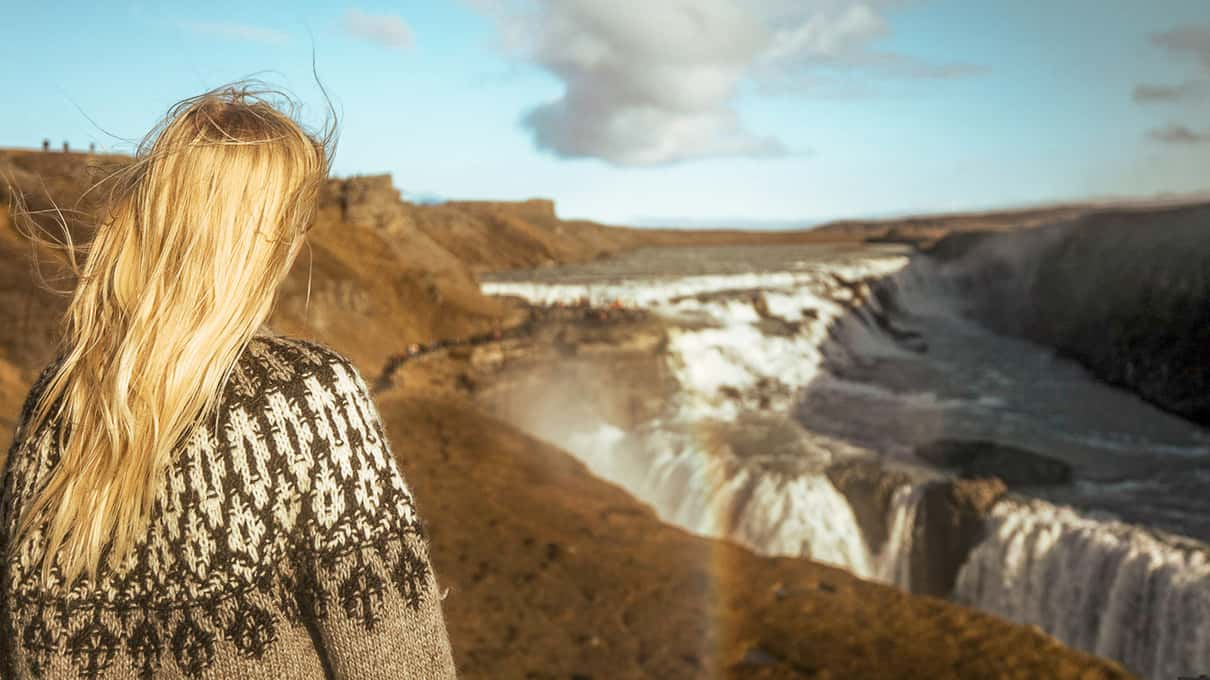
The lopapeysa, the Icelandic wool sweater with a patterned yoke around the shoulders, is the rare souvenir that earns its keep before you fly home. It stays warm when damp and stops much of the wind, though not all of it, so on a wet day it goes under the shell rather than over it.
Children need the same layers in smaller sizes, and a spare set of dry clothes left on the bus makes the afternoon easier. The Golden Circle with kids has more on long days with small travelers, and what a tour costs lists the extras you pay for on the spot, from lunch to towel rental.