The best time for the Golden Circle
Every tour on the loop runs through the year, so the question is less whether you can go than what the month hands you. June light lasts almost around the clock and brings the most coaches with it. December gives four hours of low sun and snow on the falls, with the last stop sometimes at dusk.
Any month works, for different reasons
The Golden Circle tours run daily through the year, winter included. What the calendar changes is how long the light lasts and how many coaches share the car park with you. Storms can still cancel a tour or close a road, mostly in the dark months, and free cancellation until 24 hours before on every tour we list is the safety net.
Daylight and temperature by month
Treat these figures as rough guides. Daylight is the span from sunrise to sunset in Reykjavik around the middle of each month, and the temperature is the normal afternoon high along the loop. A steady wind can make it feel ten degrees colder or more, so a 45 °F (7 °C) October afternoon bites on the open plain at Þingvellir.
| Month | Daylight | Usual high | On the loop |
|---|---|---|---|
| January | 5 h | 37 °F (3 °C) | Short days, ice on the paths, long aurora nights |
| February | 8 h | 37 °F (3 °C) | Days lengthening fast, Gullfoss still icy |
| March | 12 h | 39 °F (4 °C) | Day and night about equal |
| April | 15 h | 43 °F (6 °C) | Long days, the aurora season closing |
| May | 19 h | 50 °F (10 °C) | Long light, fewer people than in summer |
| June | 21 h | 54 °F (12 °C) | Midnight sun, the most coaches |
| July | 20 h | 57 °F (14 °C) | Warmest month, full car parks |
| August | 16 h | 56 °F (13 °C) | Green land, busy stops |
| September | 13 h | 52 °F (11 °C) | Autumn color at Þingvellir, crowds thinning |
| October | 10 h | 45 °F (7 °C) | Shorter days, aurora season under way |
| November | 7 h | 39 °F (4 °C) | The last stop can fall at dusk |
| December | 4 h | 36 °F (2 °C) | Four hours of light, storms possible |
Summer, June to August
Summer gives the most light and the greenest land. In June the sun barely sets, so a tour back in town at 5 pm still leaves you a long bright evening. It is also the season when the most coaches run the loop, and the car parks at the big stops are at their fullest.
One way around the rush is to go later in the day. In summer an afternoon departure misses some of the crowd and still finishes in daylight. Arctic Adventures' afternoon small group, from ~$103, includes pickup and the Kerið fee, but it lasts only 6 hours, with 20 to 40 minutes at each sight, and reviewers call it rushed. If the stops matter more to you than the clock, a full day gives more time, and small group or big bus compares how long each style stays.
May and September
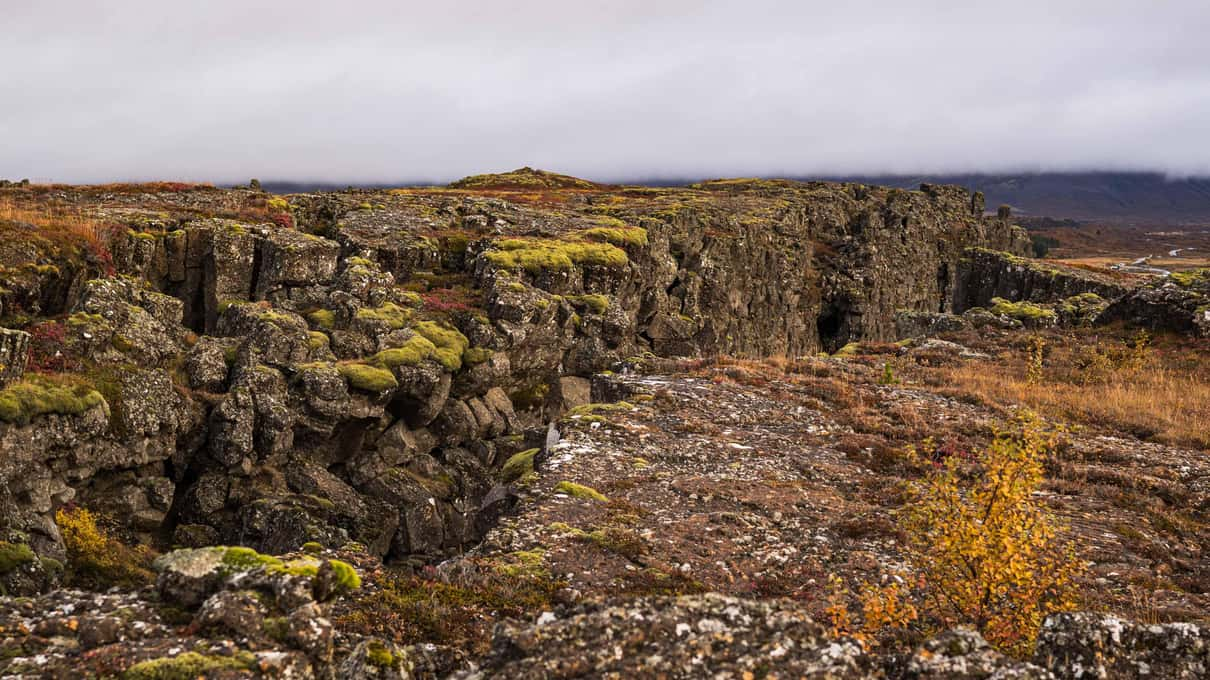
The shoulder months are the ones we would pick. May has about 19 hours of light and September about 13, plenty for every stop. Fewer people share the paths than in July. September adds autumn color, when the rift valley at Þingvellir turns red and gold, and the first dark nights of the aurora season. Both months can still be wet and windy, so a May afternoon of 50 °F (10 °C) feels colder on the plain than the number suggests.
One mid-May detail affects lagoon days. For about ten days in the middle of the month the Secret Lagoon closes for upkeep, and BusTravel's Secret Lagoon tour, from ~$129, takes you to Laugarvatn Fontana instead. Adding a lagoon to the day compares the two.
Winter, November to February
Winter turns the loop into a different day. Snow settles on the ledges of Gullfoss and ice covers the paths at Geysir. In December the sun is up for only about four hours. With so little light, the last stop, often Kerið or Þingvellir, can come at dusk. Storms can cancel tours, and when one is called off by the operator you can choose another date or take your money back. Start with shoes that grip, plus microspikes for the icy paths; what to wear on the Golden Circle has the list.
If you plan to drive in winter, look at the road map at road.is, run by the Icelandic Road and Coastal Administration, and the Icelandic Met Office forecast at vedur.is before you set out. SafeTravel posts alerts too. The Golden Circle in winter covers the season stop by stop.
Northern lights and the day tour
Aurora season runs roughly from September to April, and the northern lights need full darkness and a clear sky. A Golden Circle day tour is built around daylight, so the lights are never part of the day itself. BusTravel's Golden Circle and northern lights tour, from ~$151, adds an evening hunt to the loop in winter. The catch is a 12.5-hour day that sells only on Viator, and the lights are never promised, so count any sighting as a bonus. A separate evening trip on another night lets you choose one with a clear forecast.
Morning or afternoon departure
In winter, leave in the morning. A morning tour uses what little daylight there is, while an afternoon one can reach its last sights in the dark. BusTravel's departures at noon or later also skip Kerið, so on the classic coach, from ~$89, pick an early start if the crater matters to you. In summer the logic flips a little, since the light lasts into the night and an afternoon tour avoids part of the crowd.
A morning start, back by five
Nicetravel collects you at your Reykjavik hotel in the morning and has you back around 5 pm, from ~$119. Free cancellation until 24 hours before lets you move the day if a storm turns up in the forecast.
When in your trip to go
Put the Golden Circle near the start of your stay, ideally the first full day, and keep a spare day later on. If wind or snow cancels the tour, or the forecast looks grim the day before, you can move it without losing money, since every tour on our home page cancels free until 24 hours ahead. What a Golden Circle tour costs lists the terms for each one, and self-drive or a guided tour helps if a rental car tempts you for the same day.